Emacs vent

I know I’m grumpy this morning, but I think I’m getting tired of Emacs. Every time something doesn’t work, you have to dig in and find the one comma you fat-fingered last night or whatever, and sometimes you just don’t have the time and energy for that.

The problem is, because it’s such a huge part of my workflow, I can’t just let it go and deal with it later when I have the time. When something breaks, it’s like someone just tied my arm behind my back, and there’s a good chance I’ll have extra work later.

I don’t know. Just feel a bit lost about this whole thing.

After not sleeping well a second night, nothing is better than the nice calming noise of a leaf blower 🤪

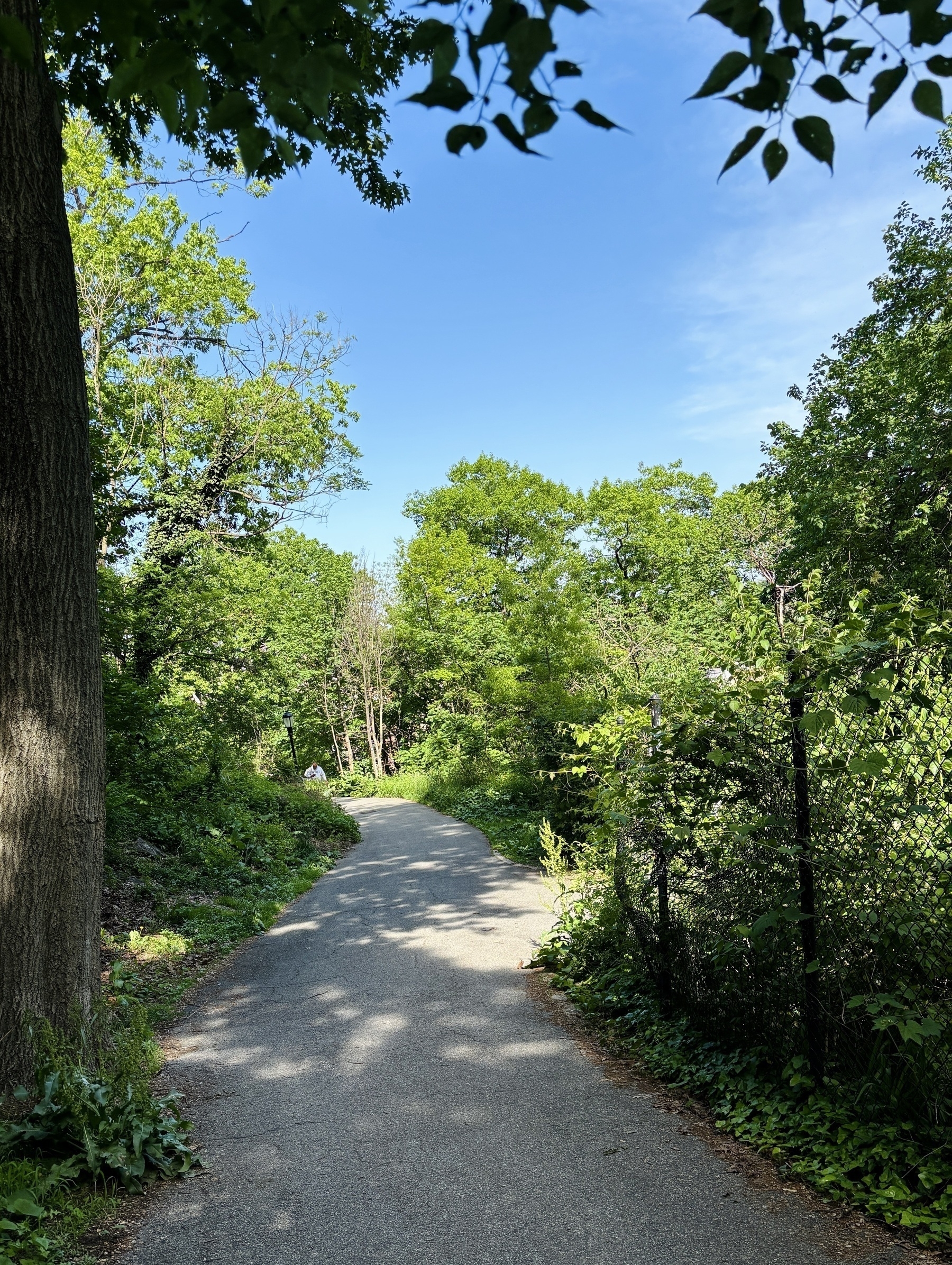
Morningside Park - 113th St. Playground.

Tom’s Restaurant.

I’ve had the MacBook Pro M2 for about two months now, connected to power 24/7, with an external screen, keyboard and mouse.

I was worried it will kill the battery, but then I found out it has a battery saving mode.

Today I worked remote for an hour and a half. I thought it will go down from 80% to like 60%, 65% if I’m lucky.

It didn’t go lower than 77%. The Mac used 3% of it’s battery (at 80% when I left home) for 1.5 hours of work. I’m very impressed.

Dutch Baby Bakery: checking out a new place in the neighborhood to work from. Good stuff here. dutch_bake.jpgA three-slice Avocad toast with sprouts and reddish. Some hot suace is springled on top.

People here who record and edit podcasts, what apps do you use? What is your generic workflow?

I haven’t lookeded at my photos in too long. At some point after returning from the last vacation I decided most of the pictures I took were crappy and hadn’t really bothered since. Maybe my Italy trip is to blame when I took some amazing shots.

A walk in the chilled air and a nice hot pizza 🍕 .

Today’s been interesting getting location check-ins (through Swarm) to show up on Micro.blog. I think this is yet another obvious area of microblogging. Parks, coffee shops, general interesting places… Why not share a map with people 🙂

So, I’m reading the micro.blog book, and there’s a loaded question I have to ask.

In the book, @manton says big companies eventually outgrow their mission statement. They forget themselves and disappear into a hollow idea of the past. I agree. We see that all the time.

When does that happen to micro.blog, and then what?

Maybe this question doesn’t need an answer as much as it is a guide?

Reading the microblogging book by @manton makes me think; what if all long form posts (with title) will be on my wiki? Is this a good separation? 🤔

Decided to take a walk. I forget how nice it can be to be outside for a few minutes in this hoodie weather. Status: self recharging 🔋

Exporting Posts / Images from Micro.blog

After looking into this myself, I wrote down the proccess in my wiki 📖.

There are a few things I am also slowy adding to it. Right now I’m working on a self-care section. Glad to keep expanding the wiki.

Important factors for journaling

I’ve been keeping a journal on and off since I was 16 or so, but it’s only in 2018 that I started being more structured about it, thanks to Emacs and org-mode. This morning, I thought about some of the reasons this journal is the most effective one for me. Here’s a list, more or less in order of importance:

  • It is mine (saved locally):

If you have a written journal (a physical notebook), you got this covered. However, if you rely on the cloud, be it iCloud or Dropbox or what have you to be able to write. If you don’t have a file or a physical piece of paper on your hard drive or your shelf, it’s not truly yours - you’re renting out a service. In the case of a personal journal, this is a hard pass for me. In my case, all my files are local and can be read without Emacs since org-mode files are essentially just text.

  • It’s easy to write down thoughts quickly:

I always have a computer around, and if I don’t, I can use my phone to open the journal file and add to it. On my iPhone, this is a bit more tricky, so I save a quick note and then copy-paste to my journal file if I really have to. Otherwise, it’s a simple matter of 5 keystrokes, and I’m there.

  • It’s Private:

A journal is private. This is another reason why I won’t have it stored on any cloud, be it iCloud, Google Drive, OneDrive, Dropbox, or whatever have you. I don’t trust anyone else to stay out of my journal because they won’t - be it the temptation to dig for profiling and ads or “think of the kids” policies. I do have a backup for my journal, a local one, and a remote one on the cloud, which gets encrypted on my computer before it’s stored away in Backblaze.

  • Pictures and drawings:

This is something org-mode is actually not great at, but it works. Pictures are powerful. Memories in a flash, they also store metadata for precise location and time. Perfect for those times when you visit a location and want a quick reference to where it was and what you did. This is one area I do use the phone for and often: I can later extract map coordinates if I want to or write an address. The filename itself tells me the exact time. Pictures that go to my journal are not kept in the cloud anymore - again, I don’t trust Google or Apple with those for long storage. For my journal, it’s good enough to resize them to about 30% of their original size and compress them as a JPG, which really saves room. This is different than preserving good photos in raw forms and processing them later for printing.

  • Internal links:

That’s probably the latest “essential” requirement I have for my journal, which works well in org-mode thanks to super-links at the moment. On paper, I used to write down page numbers and write in parenthesis something like “see p 128” as a comment. The entry that I point at also gets a link to the one I’m linking from - so they are linked to each other. In org-mode, I use these links to refer to my tasks and projects, which live outside of the journal. That way I can reflect on something I did in my journal and jump directly to the event to see the task itself.

  • Easy to read:

Probably the second reason (the first reason is that typing is faster than writing) why I keep a journal in a text file on my computer: my handwriting gets worse as I keep writing until I can no longer read it in the future. I’m also prone to spelling mistakes, which makes things harder to decipher and makes me think I have some form of undiagnosed dyslexia. A good spell-checker is a must. Org-mode also breaks down my entries automatically to years, months, weeks, days, and then events in those days, which makes things easier.

So far I’m enjoying Shutter Island by Dennis Lehane 📚. It’s written better than I thought; I like how he describes things, most of the time it draws mental pictures in my mind through his descriptions.

It makes me think of picking up In Cold Blood by Truman Capote, which I picked up at one point but never finished. I’ve been going on a SciFi streak lately, maybe it’s time to change gears a bit.

As I’m using Arc Browser more, I’m becoming aware of an annoying thread I forgot about in my days of using LibreWolf: Google’s suggestions.

Yesterday YouTube flooded me with suggestions of videos explaining of the contflict in Israel, of which I know too well first hand. Somewhere along the line I must have ran a Google search where I’m still logged into my account - and Arc Browser is not exactly privacy centered either.

Currently reading: Shutter Island by Dennis Lehane 📚

I picked this up last night after I couldn’t satisfy my “I want to read something” itch. The Library had a book named Shutter or similar, and that made me think I wanted to read Shutter Island before, and this is the right season.

Some folks here and on Fosstodon reached out to ask how my family and I are holding up in light of everything happening in Israel. Thanks for checking in, much appreciated 👍

Rendezvous with Rama

Finished reading: Rendezvous with Rama by Arthur C 📚

Ah, so this is hard sci-fi, a “category of science fiction characterized by concern for scientific accuracy and logic.” I watched The Martian without reading the book (but I did read Project Hail Mary), and I know this is another popular one I’ll add to my list.

Rama (for short) can be read as a textbook in a science class, and I wouldn’t be surprised if it’s used this way somewhere: how will a spaceship that sustains humans look like, and what makes it work? If you find yourself intrigued, this is the book for you.

It goes beyond that, giving us an interesting view of politics and society on a solar system scale, which I enjoyed (if you like that kind of sci-fi, I recommend “The Moon Is a Harsh Mistress”). A nice surprise is the existence of polyamory, or more specifically polygamy, which is the practice of marrying more than one partner (this also exists in The Moon Is a Harsh Mistress, making me curious to see what other sci-fi books have this). There are also a few common threads with The Expanse, including some themes I see in certain video games (which, I’ll have you know, can deliver a story better than movies and books).

This is my third library sci-fi book (which means it comes with a deadline, which I made in time) and, so far, my favorite. I’m taking a bit of a break from books at the moment, though I have a feeling it will be a short one.