
Pen VS Pen: 🖊️
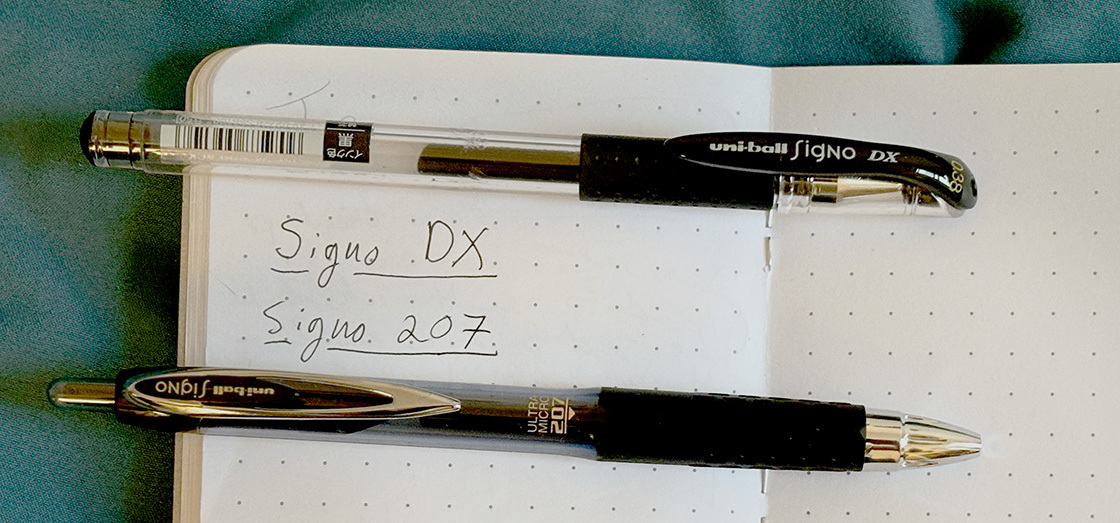
my favorite pen of several years at the top. The one I’m testing at the bottom. Both are similar gel 0.38 mm pens. My two partners got the same combo each. I will compare notes (pun intended) after a week. Who’s going to win?
The importance of saying your name correctly
My name is easily mispronounced because of how it’s written. Many years ago while I was still in elementary school, my father traveled to the US and sent me a gift. He wrote it down phonetically, the way he thought it should be pronounced, and it stuck.
For most of my life in the US, which is most of my life in general at this point, I didn’t bother correcting people. I never cared for it too much, and with time, it started working as a natural filter: those who were close to me or wanted to get to know me bothered to ask, while others who just shook my hand once every couple of months were out of my social club, which included knowing how to say my name correctly.
Only recently, I realized how selfish I’ve been. While I don’t care that much, people around me do. How embarrassing it must be for someone who works with me to be corrected - and usually by someone else - for something they assumed was correct for years! For a long time, I dismissed the cringes in their faces with a smile, assuring them it was OK, that it always happens. While true and I honestly don’t mind, it doesn’t mean they don’t feel bad about it.
Yesterday, I received the monthly invitation to participate in Micro.blog’s analog writing group from the excellent Halsted (if you’re into writing reading and books, definitely give her a read). It takes place on Zoom, and Halsted has a couple of good tips for participants, which I adopted immediately. One of them - you guessed it - is to include a pronunciation of your name with namedrop.
While I chose not to use this particular service over privacy concerns, creating a quick recording of my name and hosting it as a WAV file somewhere on the web is easy enough. I now have my email signature include my pronounces (this is another important thing: while you may be OK with people defaulting your pronounces to she/her or he/him, they might worry they misgender you, especially if you work in a workplace that is LGBTQIA aware!) and a public link on Google Drive with a recording of me saying my name. Wallah! No more cringes.
Unstragering strangers
I’ve never been good at talking to strangers. As kids, our mom always trained us to stay away from strangers; my grandparents had the same mentality, more or less. These days, I feel there’s a certain deficit.
On one end of the spectrum, there’s always been the issue of striking up a conversation with a girl I liked. That’s a whole topic in itself, one I’m still dealing with today, but the issue arises also in more subtle situations.
As I made my coffee this morning, I thought about the person who carefully packed the beans into the paper bag and wrote “Italian Espresso” in a quick yet precise cursive. They were skinny, probably in their 20s, covered in individual small black-inked tattoos of various animals and flowers. Sometimes, my bag gets readied by a man in his 60s who stands out among the otherwise young folk in the store. He sometimes asks me to repeat my order, and I find that it’s usually the same coffee names I need to repeat. I think it’s my slight accent that confuses him.
I find both individuals and the other folks in that store interesting. They always work there, and I come there often enough to know their work style. I’d like to know their names, maybe how long they’ve been working there, how they like their coffee in the morning (if they drink it then or at all), and in general, what other roles they play in their lives besides being coffee experts. How to do that, though, I have no idea.
As a man about twice the age of most of them, I understand that striking up a conversation might be interpreted as inappropriate interest. I don’t blame them for that, unfortunately. At the same time, however, I’m not sure how to get past that. I wish I could say something like “I come in peace” and let them know at the same time that if anything I ask or say makes them uncomfortable, I’d understand and back off - but it’s not something you can bring up without sounding weird in a bad way, or even creepy. So, for the most part, I smile slightly in gratitude and get out of the store. But I can’t help feeling that at least to an extent it’s a missed opportunity.
A quiet weekend away from the city is a remedy every New Yorker should take every now and then.

📷

Another interesting article in the “they don’t make them like they used to” series (see this previous post, and this one). Hat tip: Jeff Atwood.
I’ve Become Absolutely Obsessed With Ralph Nader’s Pens. Join Me on My Continuing Investigation. nytimes.com
I woke up from a long nap, and I’m almost 100%. Whatever that thing was, it’s gone now. Has a pretty weird out-of-it night with dizziness. The weather is perfect now:
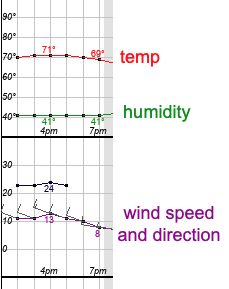
In this kind of weather, I can wear shorts or pants, and when I walk outside, I can wear a hoodie but a T-shirt is also fine.
I took a nap earlier and woke up a bit loopy. The feeling has faded, but still there, feeling dizzy. It’s weird for a cold. Tested for fever and covid again, both negative. I don’t feel horrible, more like weird and weak. Do not like.
I know crontab works on macOS, but I wanted to utilize something more “as intended.” Ended up with an Automator workflow that executes a shell command every weekend. The calendar GUI is way more “human” than crontab!
chatGPT was a boon. Sometimes AI is exactly what it’s supposed to be: a helper.
Sick day. What started yesterday as annoyance became more obvious today. Now, I have to slow down.
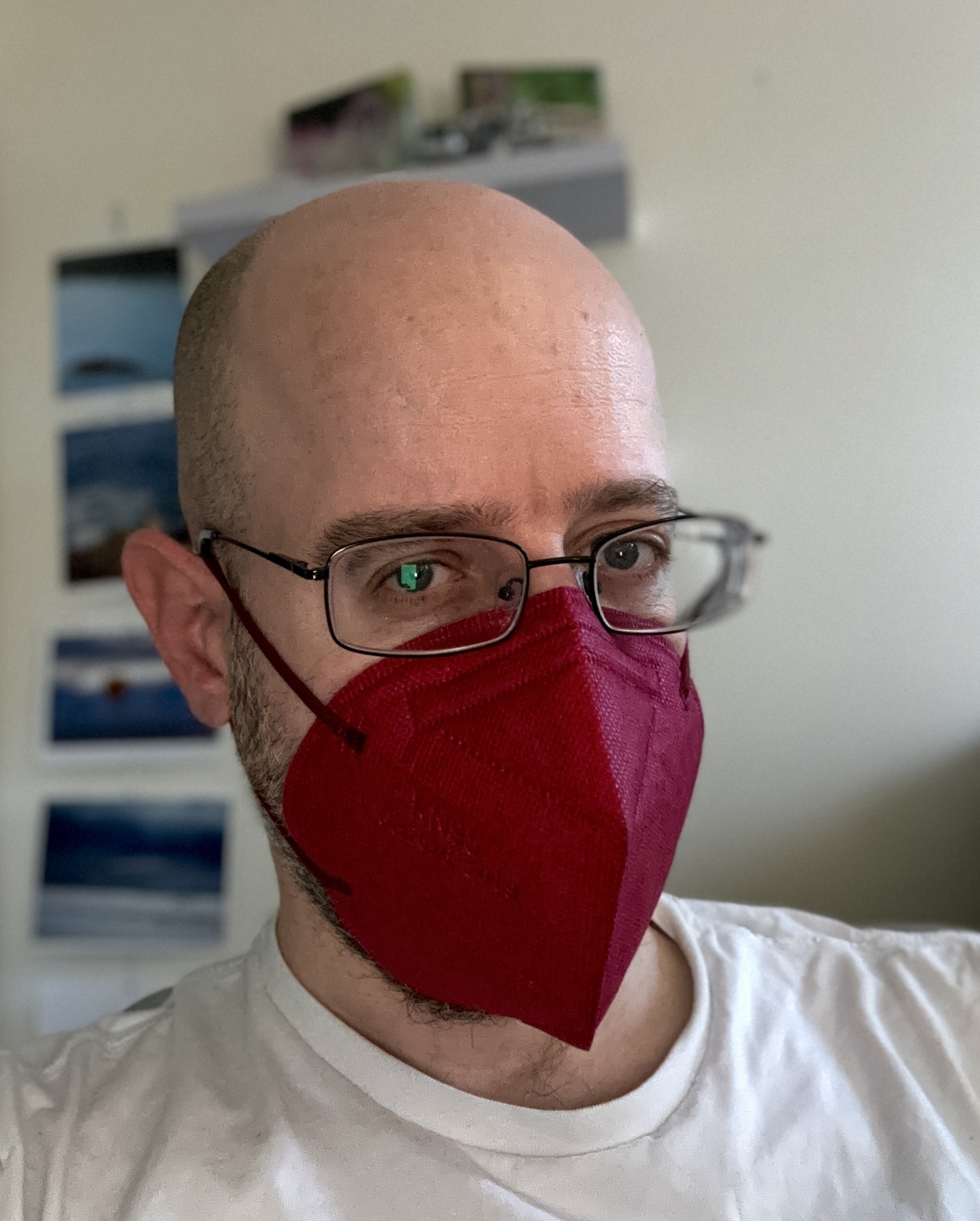
Also, man, this photo is overprocessed.
Sweaters are not what they're used to be
Only three days ago, I linked to an article from Mark Dent, which puts our shortening toilet paper conspiracy theories to rest (spoiler: it’s not a conspiracy, and you’re not crazy, it’s for real).
I contacted Dent with another conspiracy of my own about t-shirts: the t-shirts I bought over the last couple of years seem to almost melt away in the laundry. I tried different brands, and most returned from the laundry with tiny holes, as if I washed them in acid.
Dent did not investigate t-shirts or clothing directly, but he did point me in the direction of another interesting article looking into the alarmingly decreased quality of sweaters.
As it turns out:
Knits used to be made entirely from natural fibers. These fibers usually came from shearing sheep, goats, alpacas, and other animals. Sometimes, plant-derived fibers such as cotton or linen were blended in. Now, according to Imran Islam, a textile-science professor and knit expert at the Fashion Institute of Technology in New York, the overwhelming majority of yarn used in mass-market knitwear is blended with some type of plastic.
It’s not just plastic and your usual capitalistic poison, which is a big part of this problem, but also:
This race to the bottom had been going on for years, but it accelerated considerably in 2005, Sofi Thanhauser, the author of Worn: A People’s History of Clothing, told me. That year was the end of the Multifiber Arrangement, a trade agreement that had for three decades capped imports of textile products and yarn into the United States, Canada, and the European Union from developing countries.
I don’t know about you, but I find these things fascinating. Turns out that you can say, “they don’t make them like they used to,” and you be right, supported by evidence.